



How a
Quality & Me
Subir shares short stories about what people do to make a difference everywhere they go. We can make huge contributions to the way we function as a society by standing out as an example within our own community: at work, at our places of worship, among our colleagues, friends, and family. All it takes is the courage to step up and being straightforward, thoughtful, accountable, and resilient.
Books by Subir












Ever heard of a fake culture?
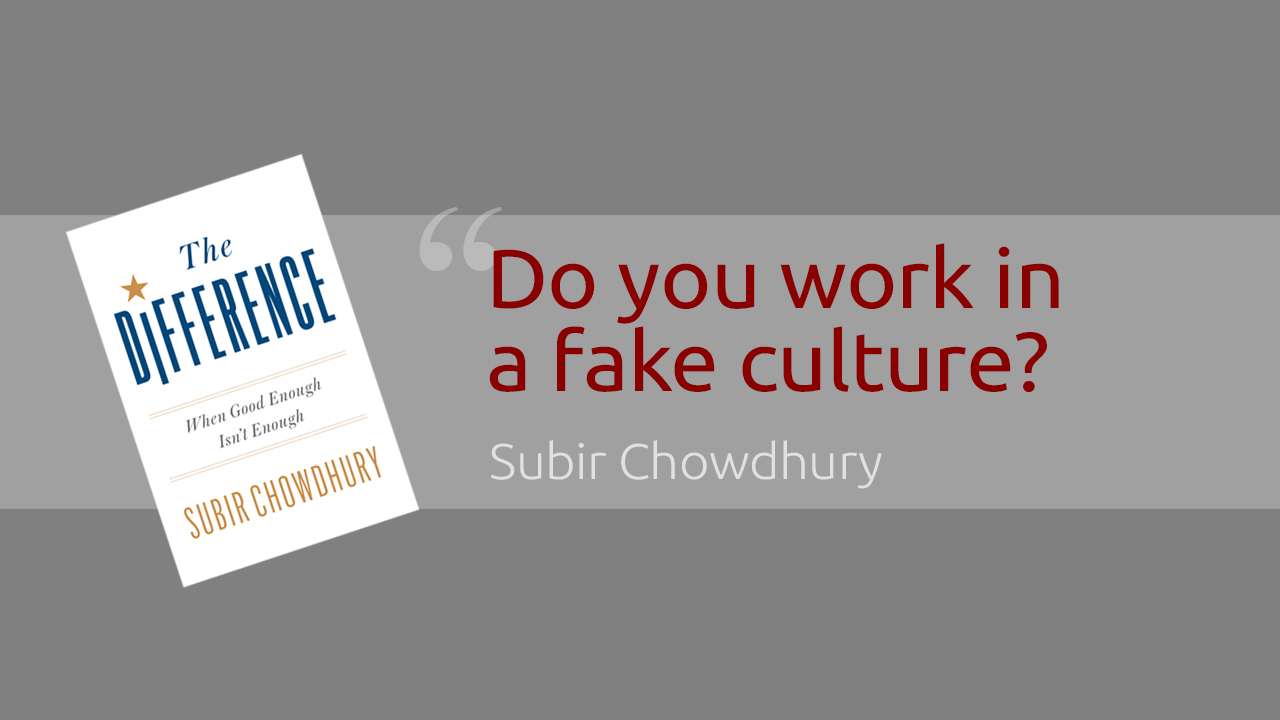
If you are not being true to yourself in all aspects of your life, you’re living in a fake culture.
As a leader, a fake culture makes it impossible to develop a caring mindset.
Without a caring mindset, you’ll never make a difference, or be the difference.
Ask yourself the following question, “Are you your true self once you leave the office?” In other words, when you go home, are you a different person?
Your answer, I’m guessing, is “I’m more myself at home.”
If so, why are you allowing yourself to live in a fake world at work?
Think about it: When you are outside of the office, you probably treat other people differently than you do colleagues at work. My guess is you treat people outside the office with respect and consideration.
You understand they have families, they have dreams, and they have problems they’re trying to work through.
You empathize because you care about them as a fellow human being.
You know what? So, do all the employees you manage during the day!
For some reason, when we walk through the office doors in the morning, people become employees. I’ve even heard employees referred to them as a “bucket of resources” as if their value was nothing more than a fast-food meal.
Take a step back and remember that everyone you work with has a story. They have a family; they have dreams; they have challenges. Those things don’t end when they arrive at the office.
If you want your employees to care about you and your organization, you need to care about them—as individuals.
By the way, stop pretending that it’s okay pretend to be someone else at work. Employees will respect the “real you” more than the “fake you”.
When people can’t be their authentic selves, the result is a fake culture. Don’t let yourself be a fake person by treating those around you as if they do not matter.
If you treat the people around you as human beings you truly care about, others will follow your cue, and quality will improve dramatically. Both at work and at home.