Stop playing games and start gaining trust

Quality & Me

Subir shares short stories about what people do to make a difference everywhere they go. We can make huge contributions to the way we function as a society by standing out as an example within our own community: at work, at our places of worship, among our colleagues, friends, and family. All it takes is the courage to step up and being straightforward, thoughtful, accountable, and resilient.

BACK TO TOPICS PAGE>

Books by Subir

The Power of LEO
The Ice Cream Maker
The Power of Design for Six
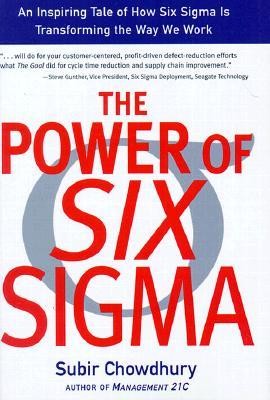
The Power of Six Sigma
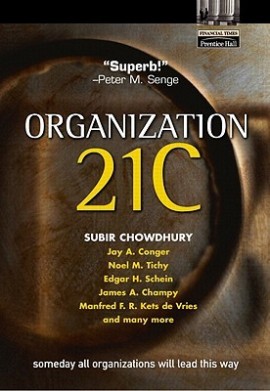
Organization 21c

A caring mindset is critical to your success, and the success of your organization. And it starts with being straightforward.

Being straightforward means you can be tough and exacting, but also honest, direct, candid, transparent, and fair.

Sounds like common sense, doesn’t it? Not always. Let me share a story with you.

A company I was advising was losing some very talented people because of one person’s actions. The unfortunate thing was that this person – we’ll call him Nick – was also very talented. But he was he was rude, took credit for others’ work, and embarrassed team members in front of their colleagues. In other words, anything but straightforward.

I tried to coach him to do the right thing because I knew he was talented. I told him to imagine what could be accomplished if he was straightforward with his own team!

His arrogance and ego continued to get in the way—until he received some devastating news.

One day, Nick confided in me that he was terminally ill. He was crushed by the news, but it also acted as an epiphany. It was as if, suddenly, he understood how his behavior had impacted others.

Instead of becoming bitter, he wanted to make things right.

Long story short, Nick made amends, and lived longer than his prognosis. And, he did some of the best work of his career. You often read about people have an explosive burst of creativity when they know they are terminally ill – the musician David Bowie comes to mind. That’s what happened to Nick. Nick discovered the power of being straightforward.

Here’s the thing: Imagine if Nick had been straightforward right from the start. Imagine how much money his organization would have saved by not having to hire and retrain people. Imagine the decreased levels of stress for both Nick and the people who worked for him. Imagine how much more fulfilled Nick would have been.

Without a caring mindset – without being straightforward – no amount of leaning in, playing tough, or taking no prisoners will help.

Stop playing games and start gaining trust. Make a difference by being the difference.


The difference between process and people

Quality & Me

Subir shares short stories about what people do to make a difference everywhere they go. We can make huge contributions to the way we function as a society by standing out as an example within our own community: at work, at our places of worship, among our colleagues, friends, and family. All it takes is the courage to step up and being straightforward, thoughtful, accountable, and resilient.

BACK TO TOPICS PAGE>

Books by Subir

The Power of LEO
The Ice Cream Maker
The Power of Design for Six
The Power of Six Sigma
Organization 21c

Mindset matters.

When it comes to quality, mindset is the difference between short-term results and long-term success.

What I’ve discovered during my work with organizations of all sizes is that you can install the best processes, and they will probably work. You may even get some decent results.

But why would you settle for “decent” when you can have extraordinary?

Here’s the secret ingredient in the difference: people.

Real, sustainable quality involves both process and people. People who have a caring mindset.

When you have a caring mindset, there is literally no end to the levels of success you can achieve.

Don’t get me wrong. Having strong processes in place are important to an organization’s success. But they are only part of the equation. Without “people” your numbers will never add up.

Even the best processes lose their power and their efficiency if the people enacting them don’t genuinely care about what they are meant to produce.

If just one person lacks a caring mindset, the dominos start to fall. A bad apple can ruin the entire bunch.

Mindset influences how we think about things. It’s that little voice inside your head that guides everything you do and say. Having an open and caring mindset is an important facet of what makes us human.

Unfortunately, not everyone has a caring mindset. I bet you know someone who can’t be bothered to understand someone else’s point of view. Or someone who gives in only because they’ve given up. Or someone else who is always blaming everyone else, never taking responsibility.

Sounds ugly, doesn’t it? You can have the best systems in place, but if people don’t care, your organization – and everyone in it – will suffer.

I once heard a CEO comment that it was important to care about customers, but that first we need to care about each other. In other words, we all need a caring mindset to fire on all cylinders.

Without people, no amount of process will improve your quality.


Step back so you can move forward

Quality & Me

Subir shares short stories about what people do to make a difference everywhere they go. We can make huge contributions to the way we function as a society by standing out as an example within our own community: at work, at our places of worship, among our colleagues, friends, and family. All it takes is the courage to step up and being straightforward, thoughtful, accountable, and resilient.

BACK TO TOPICS PAGE>

Books by Subir

The Power of LEO
The Ice Cream Maker
The Power of Design for Six
The Power of Six Sigma
Organization 21c

Part of having a caring mindset is being thoughtful.

And you can’t be thoughtful if you’re overextended or overcommitted.

When I need to recharge my batteries, I usually go for a long walk. Sometimes by myself, sometimes with one of my kids. I always end up feeling refreshed and reenergized when I return.

It’s critical that you’re passionate about what you do—otherwise, what’s the point?

However, there’s a difference between passion and obsession. Let me explain.

A CEO I was consulting with was the classic overachiever—which included making everyone else around him miserable as a result. Ironically, everyone’s productivity was suffering, including his own.

I decided to take a different approach with this guy.

When I sat down in his office for our first meeting, I noticed some photos of his kids behind his desk.

I asked him about them and got a curt response in return. This guy was all business. I persisted.

I asked him about the last time he had spoken with them.

He flippantly told me couldn’t remember, and made it clear I wasn’t being paid for family counseling.

At that point, I informed him our meeting was ending because I wanted him to spend the rest of our scheduled hour reconnecting with his children. I told him the time we had spent together was gratis if he would call his kids.

To make a long story, short: The CEO cancelled our next scheduled meeting. Not because he was angry, but because he and his kids reconnected and ended up spending a week at a cabin creating memories a recharging.

When I saw him for our rescheduled meeting, he looked like a new man—excited, invigorated, smiling.

I told him a lot of other people in the organization were feeling the same way—those folks also needed to recharge.

Being thoughtful means taking an interest in yourself, your family, your employees. You need to take a step back, so you can move forward.

Cutting Corners

Is it culture, the weather, geography? Perhaps ignorance of what the right policies are? Simply, no. None of these factors is either definitive or destiny. Otherwise, how to explain why Botswana has become one of the fastest growing countries in the world, while other African nations, such as Zimbabwe, the Congo, and Sierra Leone, are mired in poverty and violence?

Fear freezes your ability to be straightforward

When we are scared, nervous, or afraid, we shut out the outside world.  We become less open and transparent. Instead of accepting our true selves, and admitting that we are afraid, we put up a wall designed to keep out the truth.  We make things up to compensate—about how good-looking we are, about how clever or competent we believe ourselves to be, about how much money we make. We lose sight of the importance of being straightforward and honest. Fear can undermine openness and honesty in anyone—including me!

What is your difference?

In the past two decades, I have helped countless organizations improve their processes to find greater success. But over the years, something began to haunt me. I noticed that some organizations using the exact same process or methodology realized enormous savings, while others stumbled. I kept wondering, what is the difference?

Quality is Everyone’s Business

The word "Quality" should mean more than a management tool that measures output of a company - and it can, if only we tap into the power of people to do the best that they can do – all of the time. Rather than see quality as a management process, I see it as a lifestyle choice - an underlying motive to work toward personal excellence.


Have you gotten the “Wake-up” call to be straightforward?

Quality & Me

Subir shares short stories about what people do to make a difference everywhere they go. We can make huge contributions to the way we function as a society by standing out as an example within our own community: at work, at our places of worship, among our colleagues, friends, and family. All it takes is the courage to step up and being straightforward, thoughtful, accountable, and resilient.

BACK TO TOPICS PAGE>

Books by Subir

The Power of LEO
The Ice Cream Maker
The Power of Design for Six
The Power of Six Sigma
Organization 21c

A director I was consulting with always expected people to come to him.

This guy really believed that no news was good news. Like a lot of senior level executives, he expected people to come to him, not vice versa.

The problem was, no news wasn’t good news—it was the opposite. Problems weren’t getting resolved.

He asked me to help him figure out why the company wasn’t meeting its goals. Interestingly, he didn’t include his own team members in the discussion. Only me.

I told him he needed to spend more time on the floor–where the action was. Spend some time just listening to what is going on.

We joined a meeting already in progress. The discussion was heated; clearly people in the meeting weren’t happy.

When we walked in, everyone was shocked into silence—they hadn’t seen this director outside of his office in months.

After a few seconds, the director took my lead, and told everyone to pretend he wasn’t there, and to continue their meeting.

That’s when something really interesting happened.

Instead of ignoring the director’s presence, one engineer used it as an opportunity. He spoke up and out—in a refreshingly straightforward manner.

This engineer wasn’t concerned about what his response might mean to him personally—or professionally. It was unusual behavior in this company.

He told the director point blank that unless the organization invested in improving its products, two or three years down the road, the company would be dealing with recalls, or even lawsuits.

It took guts for this engineer to tell the director truth. It was, unfortunately, rare behavior in this organization.

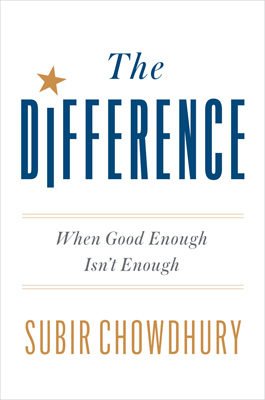
In this case, the director responded positively, even thanking the engineer for being so candid. I think it was the “wake-up call” he needed. In fact, he told everyone in the room that “good enough isn’t enough.” They still had a long way to go, but it was a good first step.

If you want to make a difference, and be the difference, you cannot be afraid of the truth.


What does it take to be accountable?

Quality & Me

Subir shares short stories about what people do to make a difference everywhere they go. We can make huge contributions to the way we function as a society by standing out as an example within our own community: at work, at our places of worship, among our colleagues, friends, and family. All it takes is the courage to step up and being straightforward, thoughtful, accountable, and resilient.

BACK TO TOPICS PAGE>

Books by Subir

The Power of LEO
The Ice Cream Maker
The Power of Design for Six
The Power of Six Sigma
Organization 21c

One of the components of developing a caring mindset is accountability.

Accountability is taking responsibility for your actions. It’s the “A” in STAR, and acronym I developed for what it takes to have a caring mindset.

But first, we need to take a step back. You can’t be accountable if you don’t know what’s going on.

You can’t know what’s going on if all you do is sit in your office, review spreadsheets, and commiserate with your peers.

If you want to know what’s going on in your organization – really going on – take a walk.

I tried for weeks to get a manager I was consulting with to connect with his team—things weren’t going well, and no one was being accountable. There was a clear disconnect between himself and his team of engineers. The manager blamed the engineers and vice versa.

“Let’s take a walk,” I told him. “Let’s go and talk to your team.”

I then heard every excuse under the sun – meetings, reports, no time. He finally admitted he wouldn’t know what to say to them.

Can you imagine? A manager who doesn’t know what to say to the people who work for him!

I told him, it’s easy: “Be yourself. Relax, smile, ask questions, and refrain from judging.”

Here’s my point: this manager was focused on processes—what people were doing. He wasn’t focused on the people aspect of problem-solving. He didn’t even know what to say to people.

Achieving exceptional results requires commitment to both processes and people. That’s why you need to get out of your chair and meet with the people who report to you—on their turf, and not in your office.

What someone says in your office doesn’t always reflect what’s really happening on the ground. People are afraid to accept accountability because they become intimidated. Meet them half way, and you’ll see a big difference!

Encourage people to speak up and not be afraid. Not everything you hear will be good news—but if someone is afraid to speak up, they’ll never embrace being accountable. There is a big difference between the action on the battlefield and the action in headquarters, miles behind the lines.

If you want accountability in your organization, make sure your team knows you respect, trust and believe in them.

Empathy for Quality

To have empathy for someone means you are putting yourself in a position to feel what that person is feeling. The world could use a great deal more empathy. It’s easy to see that we could decrease disputes and disagreements by being more empathetic, and we’d quickly clear up misunderstandings and misconceptions. Taking it one step further, empathy becomes strategic as new channels of data open to us.

Resistance to Compromise

In the food profession, Chantal Coady is a superstar. How did she get there? Chantel was never satisfied with anything until it was perfect—good enough was never enough. She was always passionate about chocolate, even as a child. When she was old enough to work, Chantel took a part-time job in the chocolate department at Harrod’s, the famous department store in London.

LEO Revisited: The benefits of “Listen, Enrich, Optimize”

I have mentioned “Listen, Enrich and Optimize” in previous articles and I'll probably mention them again. They are the main principles of my LEO methodology and they are integral to "Quality is Everyone’s Business” (QIEB) philosophy.  We use QIEB to ensure that everyone in the organization is driving toward the same goal of Quality. LEO helps ensure that this transformation is sustainable.

What does your mission statement say about quality?

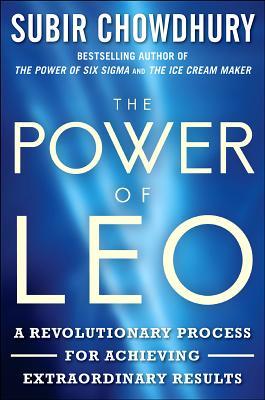
In this bestselling book, Chowdhury introduced his next-generation management system — LEO. In The Power of LEO, he describes how continuous focus on quality improvement can revolutionize any process—from manufacturing operations to managerial decision making. The secret is to cease delegating the responsibility of quality to specific teams or departments and permanently lodge it within the core of an organization’s culture.


Do you work in a fake culture?

Quality & Me

Subir shares short stories about what people do to make a difference everywhere they go. We can make huge contributions to the way we function as a society by standing out as an example within our own community: at work, at our places of worship, among our colleagues, friends, and family. All it takes is the courage to step up and being straightforward, thoughtful, accountable, and resilient.

BACK TO TOPICS PAGE>

Books by Subir

The Power of LEO
The Ice Cream Maker
The Power of Design for Six
The Power of Six Sigma
Organization 21c

Ever heard of a fake culture?

If you are not being true to yourself in all aspects of your life, you’re living in a fake culture.

As a leader, a fake culture makes it impossible to develop a caring mindset.

Without a caring mindset, you’ll never make a difference, or be the difference.

Ask yourself the following question, “Are you your true self once you leave the office?” In other words, when you go home, are you a different person?

Your answer, I’m guessing, is “I’m more myself at home.”

If so, why are you allowing yourself to live in a fake world at work?

Think about it: When you are outside of the office, you probably treat other people differently than you do colleagues at work. My guess is you treat people outside the office with respect and consideration.

You understand they have families, they have dreams, and they have problems they’re trying to work through.

You empathize because you care about them as a fellow human being.

You know what? So, do all the employees you manage during the day!

For some reason, when we walk through the office doors in the morning, people become employees. I’ve even heard employees referred to them as a “bucket of resources” as if their value was nothing more than a fast-food meal.

Take a step back and remember that everyone you work with has a story. They have a family; they have dreams; they have challenges. Those things don’t end when they arrive at the office.

If you want your employees to care about you and your organization, you need to care about them—as individuals.

By the way, stop pretending that it’s okay pretend to be someone else at work. Employees will respect the “real you” more than the “fake you”.

When people can’t be their authentic selves, the result is a fake culture. Don’t let yourself be a fake person by treating those around you as if they do not matter.

If you treat the people around you as human beings you truly care about, others will follow your cue, and quality will improve dramatically. Both at work and at home.

Four Cornerstones for Change

Do you want to change your organization - to transform the rank and file members so that they WANT to achieve true Quality? Of course you do - who doesn't.

Abolish your Quality Department

For decades now, we’ve made the Quality Department the epicenter of our quality policy. But has this attention been misplaced? My contention is that the reason we have failed to deliver resilient and sustainable quality from American businesses is that we are too focused on the metric of quality. We have turned a qualitative question into a quantitative one, and that simply will not work.

The Quality Process Revolution

For years now, I have been observing organizations just to see what makes their operations rise above the rest and make them what I call “excellent organizations.” What I discovered is more common sense than it is groundbreaking.

What does Quality mean to You?

When I ask people, “what does Quality mean to you?” I hear a wide range of answers. For some people, their answer is, “Quality means putting out the best product or service possible.”  Others may say, “Honesty and trust.” Many will tell you, “Quality means doing the right thing at the right time.” Still others will say, “Quality is a resistance to compromise.” However, more often than not, I still hear “ I have no idea, that’s why we have a quality department,” or “Hey let me ask my Vice President of Quality,” or even worse yet, “I’m not sure what quality means to me.”